As outside temperatures rise, cold storage facilities face increasing pressure to maintain stable internal conditions while keeping energy costs under control. Every door opening presents an opportunity for warm, humid air to enter and conditioned air to escape, creating challenges that extend far beyond higher utility bills.
For facilities handling chilled or frozen products, seasonal changes can have a significant impact on operational efficiency, product integrity, equipment performance, and employee safety. While refrigeration systems work harder to compensate, preventing unwanted air exchange at the source can often deliver the greatest long-term value.
The Hidden Cost of Warm Weather
Cold storage environments rely on maintaining precise temperatures, but during warmer months the temperature difference between indoor and outdoor environments becomes much greater. Each time a loading bay or personnel door opens, warm air naturally flows into the colder space while cold air escapes.
This continual air exchange creates a range of operational challenges, including:
- Increased refrigeration demand
- Higher energy consumption
- Temperature fluctuations
- Longer equipment run times
- Reduced operational efficiency
Many facilities focus on increasing refrigeration capacity to overcome these issues, but preventing conditioned air from leaving the building is often a more effective and sustainable approach.
Humidity Creates More Than Just Discomfort
Warm weather also brings higher humidity levels, which can create serious challenges inside cold storage environments.
When humid air enters a chilled or frozen facility, moisture condenses on contact with cold surfaces. This can lead to:
- Ice build-up around doorways
- Frost forming on evaporator coils
- Slippery floors that increase safety risks
- Reduced visibility through cold room entrances
- More frequent defrost cycles
Over time, excess moisture can also reduce the efficiency of refrigeration equipment, increase maintenance requirements, and interrupt normal operations. Humidity can also affect stored goods, particularly products packaged in cardboard. As moisture is absorbed, packaging can become soft or damaged, making products more difficult to handle, transport, and store safely throughout the supply chain.
Managing humidity is therefore just as important as maintaining temperature.
Protecting Product Quality
Temperature consistency is critical across many cold storage applications, including food production, pharmaceutical storage, and temperature sensitive manufacturing.
Frequent warm air infiltration can create temperature fluctuations that place unnecessary stress on refrigeration systems and make it more difficult to maintain consistent storage conditions.
By reducing the movement of outside air into temperature-controlled spaces, facilities can help protect product quality while supporting compliance with storage requirements and industry standards.
Reducing Energy Consumption Without Compromising Access
Cold storage operations often require frequent movement of people, forklifts, and goods throughout the day. While keeping doors closed may seem like the simplest solution, it is rarely practical for busy facilities.
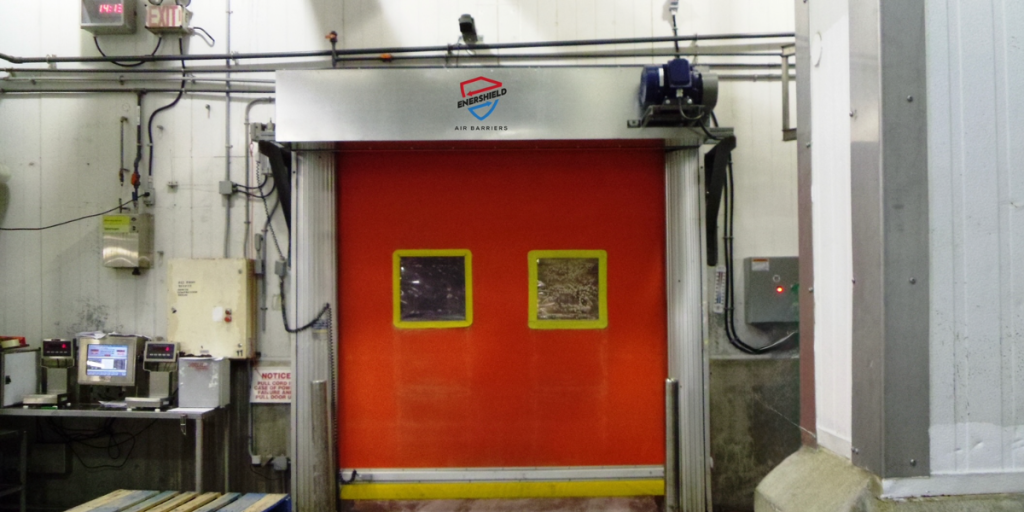
Air Barriers provide an effective alternative by creating up to a 90% seal across the door opening using an invisible stream of air across open doorways. This helps reduce the transfer of warm air into the facility while limiting the escape of conditioned air, allowing operations to continue without restricting access.
Many cold storage facilities have traditionally relied on plastic strip curtains to reduce air exchange. While they can provide a degree of separation, they often become brittle in low temperature environments and require regular replacement. Over time, they can also become scratched, reducing visibility through busy doorways, while dirt and debris can build up on the strips, creating additional maintenance and hygiene considerations. Air Barriers offer an alternative approach by helping to minimise air transfer without creating a physical obstruction across the opening.
By reducing unnecessary air exchange, facilities can:
- Lower refrigeration energy consumption
- Reduce cooling losses through open doorways
- Minimise equipment workload
- Support more stable internal temperatures
- Improve overall operational efficiency
A Smarter Approach to Cold Storage Performance
As businesses continue looking for ways to reduce energy consumption and improve sustainability, preventing conditioned air loss is becoming just as important as generating cooling efficiently.
Rather than asking refrigeration systems to compensate for every door opening, Air Barriers help minimise the problem before it enters the building.
For cold storage facilities operating through the warmer months, this can mean lower operating costs, improved environmental control, reduced humidity related issues, and more consistent performance across the entire facility.
Investing in Air Barriers is not simply about improving comfort. It is about protecting products, reducing unnecessary energy use, and helping cold storage operations perform more efficiently when demand on refrigeration systems is at its highest.