Modern industrial and commercial facilities are under increasing pressure to improve energy efficiency, reduce operational costs, and deliver consistent environmental performance without slowing down operations.
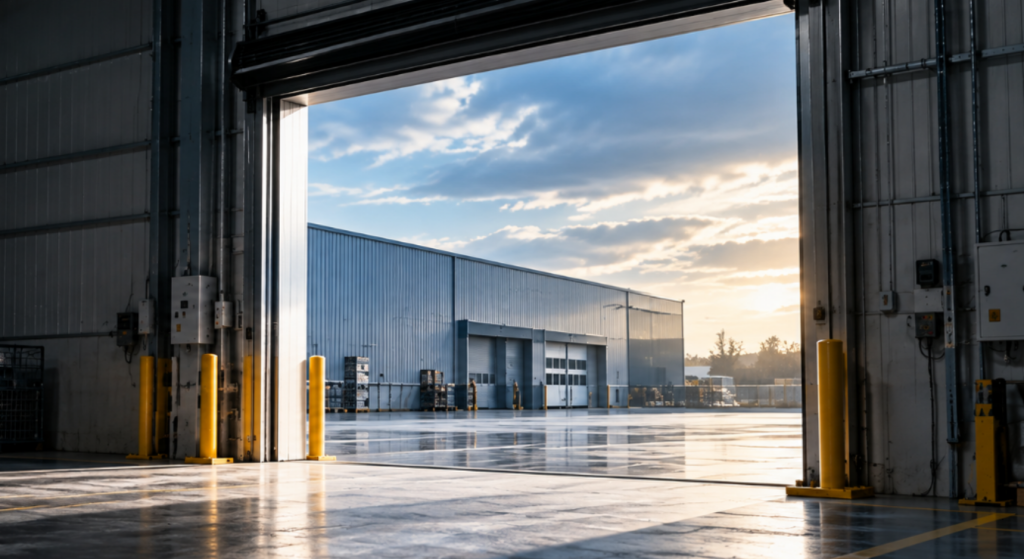
One of the most noticeable shifts in recent years is how entrances are being re-evaluated. Rather than being treated as simple access points, they are increasingly recognised as active performance zones that directly influence building efficiency.
Yet in many facilities, entrance systems are still designed and specified in isolation. Fast action doors and air barriers are often seen as alternative solutions rather than complementary technologies. This approach can limit overall performance potential.
The most effective facilities are now moving towards integrated entrance strategies, where multiple systems work together to manage both operational speed and environmental control.
A shift towards system-based entrance design
Traditionally, entrance design decisions have been made based on a single priority, such as speed, cost, or environmental separation.
However, this approach is increasingly out of step with how modern facilities operate.
Energy efficiency targets, ESG commitments, and rising operational costs are forcing organisations to think in terms of whole-system performance rather than isolated components.
In this context, entrances are no longer just functional openings in a building envelope. They are dynamic zones where energy, air, and operational flow intersect.
Facilities that continue to treat entrance solutions independently often miss opportunities to improve efficiency across multiple performance areas.
The role of fast action doors in modern operations
Fast action doors are designed to support high-frequency movement in busy environments. Their primary function is to reduce the time an entrance remains open, helping to improve operational flow and limit unnecessary exposure.
In practice, they are widely used in logistics, manufacturing, warehousing, and distribution environments where speed of movement is critical.
However, even high-speed doors cannot eliminate environmental exchange entirely. Every opening cycle still creates a window where air, temperature, and external conditions can enter the facility.
This is where broader system thinking becomes important.
The role of air barriers in environmental stability
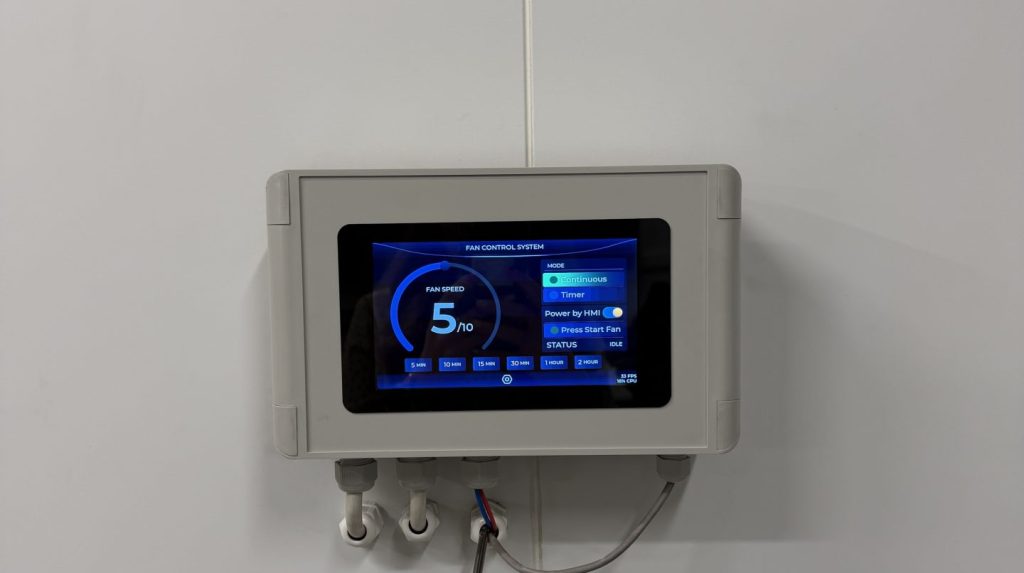
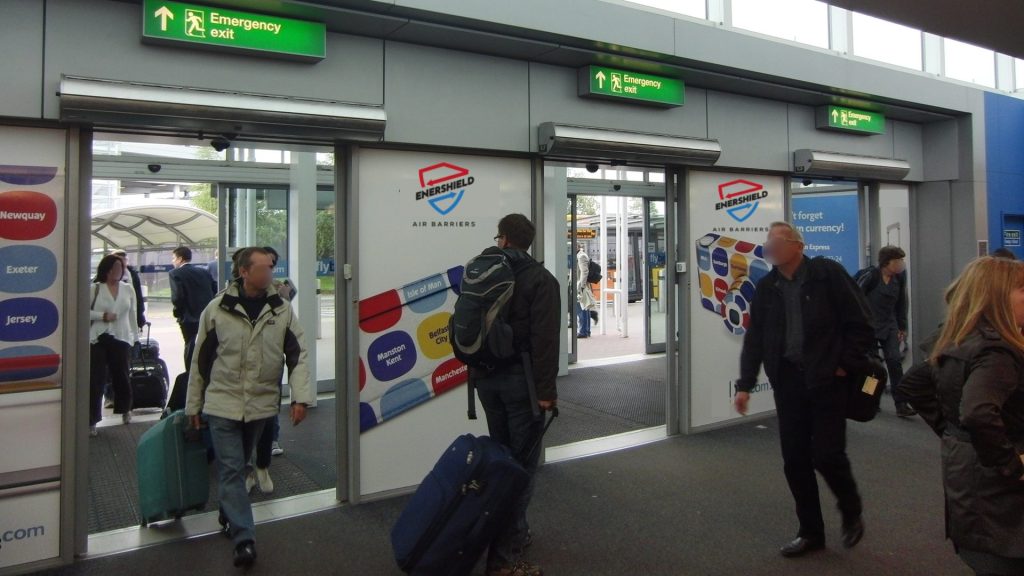
Air barriers are designed to manage environmental separation during open-door conditions by creating a controlled stream of air across entrances.
Rather than restricting movement, they support it, helping to reduce heat loss, temperature fluctuations, and the ingress of dust or external air.
In high-traffic environments, this continuous layer of protection becomes particularly important, as doors may be opening and closing constantly throughout the working day.
Air barriers are most effective when they are not seen as standalone solutions, but as part of a wider entrance strategy.
Why combining systems delivers stronger performance outcomes
The idea that facilities must choose between fast action doors and air barriers is increasingly outdated.
In reality, they address different parts of the same operational challenge.
Fast action doors reduce exposure time by opening and closing quickly.
Air barriers reduce the impact of exposure during the periods when doors are open.
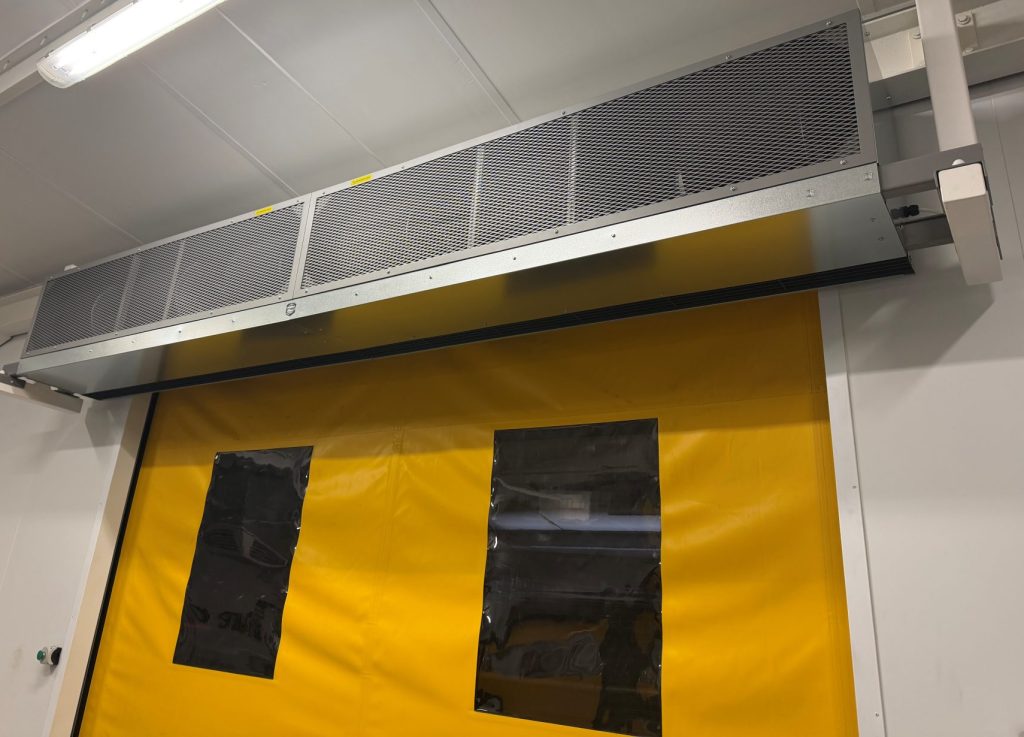
When used together, these systems create a layered approach to entrance management that improves overall performance.
This combined strategy can help facilities:
- Reduce unnecessary energy loss during operational activity
- Improve stability of internal environmental conditions
- Support more consistent HVAC performance
- Maintain operational speed without compromising control
The key point is not substitution, but coordination.
Moving beyond traditional air lock designs
In highly controlled environments such as pharmaceutical and food production facilities, fast action doors are often installed as part of an air lock system. This typically involves two doors operating independently so that both cannot remain open at the same time.
While effective for environmental separation, air lock systems can slow the movement of traffic, require additional floor space, and increase both installation and maintenance costs due to the need for two doors. In some facilities, operational teams may even override controls to improve throughput.
As a result, some organisations are now replacing traditional air lock arrangements with a single fast action door combined with an air barrier. This approach can help maintain environmental control while improving traffic flow and recovering valuable operational space.
Convenience versus performance-led design
As integrated entrance solutions become more common, some door manufacturers are introducing combined fast action door and air curtain systems as a single product offering.
While these solutions may suit certain internal or lower-demand applications, they may not deliver the same level of environmental control in more challenging conditions. These are often designed with lower velocity airflow and side-mounted air diffusers which can create turbulent airflow patterns, limiting overall performance compared with standalone air barrier systems.
As with any entrance strategy, performance depends on selecting solutions that are appropriate for the conditions and operational demands of the facility and should be prioritised over convenience alone.
Where the industry is still underestimating entrance performance
Despite advances in building technology, entrance zones remain one of the most under-optimised areas in many facilities.
There is still a tendency to prioritise individual system efficiency while overlooking how those systems interact in real operational conditions.
In practice, this means facilities may invest heavily in efficient HVAC or insulation systems, while leaving entrance areas as unmanaged points of energy loss.
This gap in system thinking is where significant performance gains are often available.
High-performance facilities are changing their approach
Leading facilities are beginning to take a more integrated view of building performance.
Instead of asking which entrance solution to install, the focus is shifting towards how different technologies can work together to support operational goals.
This includes balancing:
- Speed of movement
- Environmental control
- Energy efficiency
- Operational resilience
Entrance design is increasingly being treated as a strategic consideration rather than a tactical one.
Applications in demanding operational environments
The combined use of air barriers and fast action doors is particularly relevant in environments where both speed and environmental control are critical.
This includes:
- Warehouses and distribution centres
- Cold storage facilities
- Manufacturing plants
- Food production environments
- Logistics hubs
In these settings, entrances are constantly active, and even small inefficiencies can scale into significant energy and operational impacts over time.
A layered entrance strategy helps address these challenges without restricting workflow.
A more realistic view of energy efficiency
Energy efficiency in modern facilities is not achieved through a single upgrade or technology.
It is the result of multiple systems working together effectively under real operating conditions.
Entrance performance is a clear example of this.
Fast action doors and air barriers do not compete. They complement each other when correctly applied.
This reflects a broader shift in industrial thinking towards integrated, performance-led facility design rather than isolated system optimisation.
Rethinking entrances as integrated performance systems
The way facilities approach entrance design is changing.
Rather than selecting individual solutions in isolation, there is a growing recognition that entrances must be designed as integrated systems that balance operational speed with environmental control.
Fast action doors and air barriers each play a distinct role, but their combined use offers a more complete response to the challenges faced in high-traffic environments.
As pressure increases to improve efficiency, reduce energy loss, and enhance operational performance, this systems-based approach to entrance design is becoming increasingly important.
In modern facilities, performance is not defined by a single technology. It is defined by how well those technologies work together.