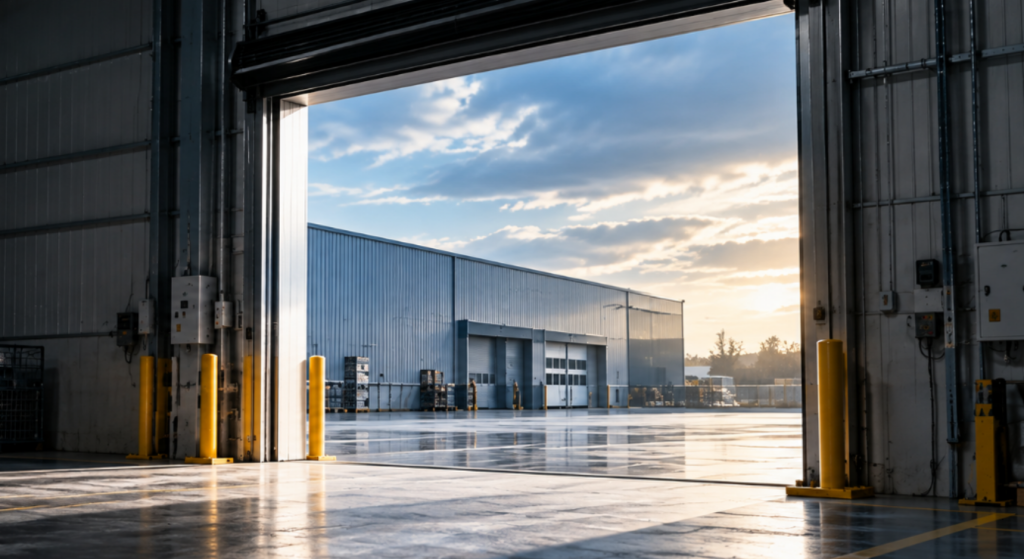
For most industrial facilities, doors are simply a way to move people, products and vehicles in and out of a building. In busy warehouses and manufacturing environments, high speed industrial doors can complete hundreds of cycles every day. A frequently used door operating every 3 minutes could open between 160-480 times each day depending on the number of operational shifts. Each opening may only last a few seconds, but together they represent a significant amount of time where the building is exposed to the outside environment.
Yet every time a large doorway opens, something else enters alongside the people or vehicles passing through. Outside air rushes in, conditioned air escapes, temperatures fluctuate and the building’s carefully controlled environment begins to change. While each individual door opening may seem insignificant, the cumulative impact over weeks, months and years can have a measurable effect on energy consumption, operational efficiency and workplace comfort.
As businesses continue to invest in energy efficiency, decarbonisation and building performance, it is worth asking the question. What happens every time an industrial door opens?
An Invisible Exchange That Happens in Seconds
The moment a doorway is opened, air naturally moves from one environment to another. The direction and intensity of this airflow depend on several factors, including outdoor temperature, wind pressure and the pressure differences between inside and outside the building.
This process, known as air infiltration, is largely invisible. Unlike a leaking pipe or a broken piece of machinery, there is nothing obvious to alert building managers that conditioned air is constantly being lost.
Instead, the effects appear gradually throughout the facility. Warm air escapes during winter. Hot air enters during summer. Humidity levels fluctuate, dust and airborne contaminants are carried inside and heating or cooling systems must work harder to restore stable conditions.
For facilities with frequent vehicle movements or busy pedestrian entrances, this cycle repeats continuously throughout the working day.
The Hidden Chain Reaction
A single door opening lasts only a matter of seconds, but the consequences extend far beyond that brief moment.
As outside air enters the building, heating or cooling systems respond by increasing output to compensate for the sudden temperature change. This places additional demand on HVAC equipment and increases energy consumption.
Employees working near entrances may experience uncomfortable draughts or fluctuating temperatures, while areas further inside the building can become harder to maintain at consistent conditions.
In environments where stable temperatures are important for manufacturing processes, packaging, storage or product quality, even small fluctuations can have wider operational implications.
What appears to be a simple doorway quickly becomes part of a much larger chain reaction.
More Than an Energy Issue
Energy loss is often the first concern associated with open doorways, but it is rarely the only one.
Uncontrolled airflow can also introduce dust, pollen, exhaust fumes, insects and moisture into a building. Depending on the industry, these factors may affect cleanliness, employee wellbeing, customer experience or production quality.
For food manufacturers, pharmaceutical facilities and electronics production, maintaining a consistent internal environment can be critical to protecting products and meeting quality standards.
In warehouses and distribution centres, temperature fluctuations may affect stored goods or create uncomfortable working conditions for employees.
Retailers and hospitality venues face different challenges. Customers entering through a doorway should experience a comfortable environment, not a sudden blast of cold or hot air that detracts from their experience.
Although these issues vary between industries, they often share the same starting point.
An uncontrolled building entrance.
Why Stable Conditions Matter
Modern industrial facilities are becoming increasingly sophisticated. Manufacturers are investing in automation, precision equipment and tightly controlled production environments. Warehouses are adopting advanced climate control systems to protect stock and improve energy efficiency.
In these environments, stability is becoming just as important as efficiency.
Consistent temperatures can help improve product quality, reduce process variation, protect sensitive equipment and create more comfortable workplaces.
Even relatively small changes in airflow can influence humidity, condensation and overall environmental consistency, particularly in facilities with high traffic entrances.
As businesses strive for greater operational resilience, controlling what happens at the building entrance is becoming an increasingly important part of the conversation.
Rethinking the Industrial Entrance
Many organisations have invested heavily in upgrading lighting, insulation, heating systems and renewable technologies as part of wider sustainability strategies.
However, the performance of these systems depends on the building’s ability to retain the conditioned environment they create.
If conditioned air is continually escaping through frequently opened entrances, the return on those investments can be reduced.
This is why more businesses are beginning to view entrances not simply as access points, but as critical components of overall building performance.
Just as insulation helps reduce heat loss through walls and roofs, effective entrance management helps reduce unnecessary air exchange where buildings remain open to outside conditions.
Taking Control of Airflow
Rather than accepting air movement as an unavoidable consequence of an open doorway, many facilities are looking at ways to actively manage it.
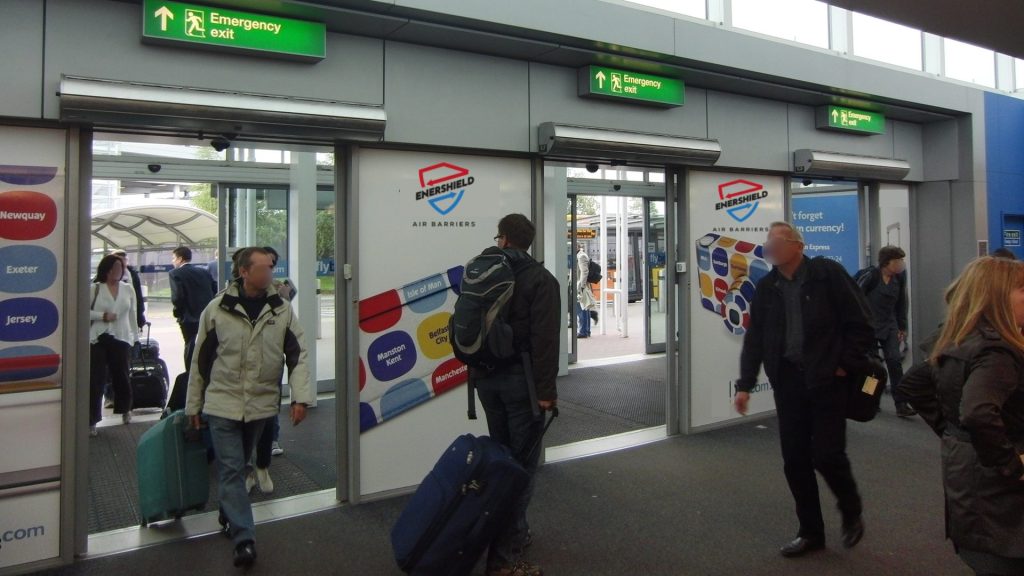
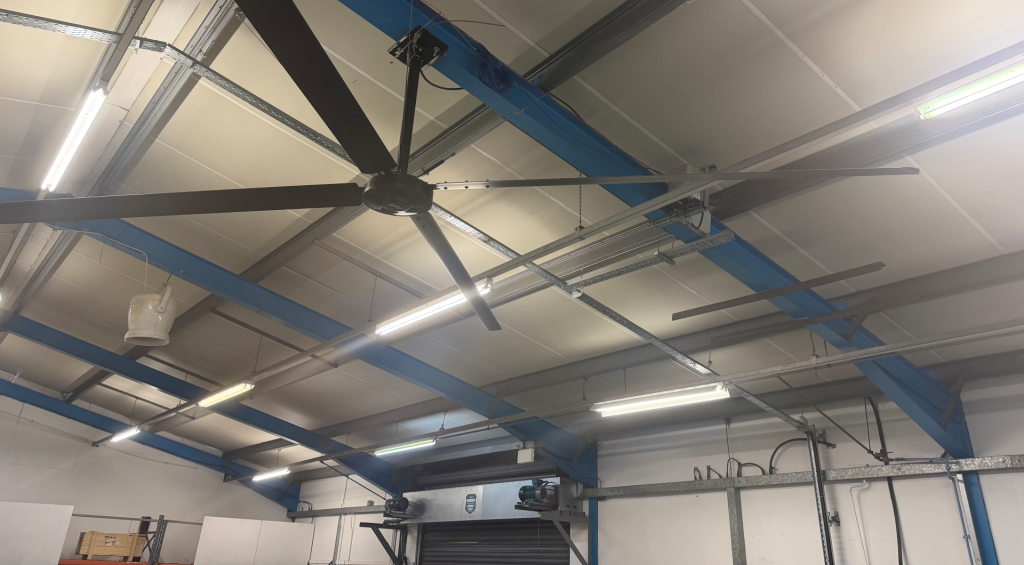
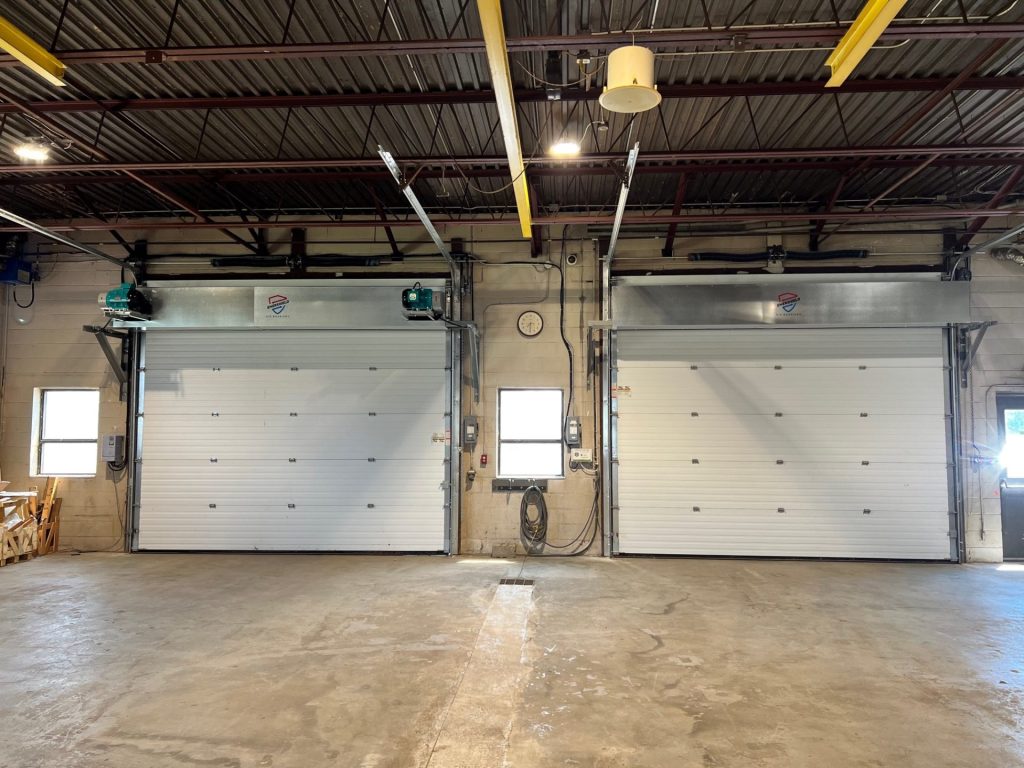
Air Barriers are designed to create a seal across a door opening, helping to reduce the exchange of inside and outside air while maintaining unrestricted access for people, forklifts and vehicles. Unlike physical barriers, they continue protecting the doorway while the door is open and operations carry on as normal, allowing productivity and environmental control to work hand in hand.
Unlike physical barriers, they continue protecting the doorway while operations carry on as normal, allowing productivity and environmental control to work hand in hand.
A common misconception is that operating an Air Barrier simply adds another piece of equipment consuming electricity. In reality, the energy required to operate an Air Barrier is typically only a fraction of the heating or cooling energy that can be lost through uncontrolled air infiltration at a frequently used entrance.
The key is understanding the balance between the energy consumed by the Air Barrier and the energy saved by reducing conditioned air escaping from the building. Every facility is different, with doorway dimensions, opening frequency, indoor and outdoor temperatures, heating systems, operating hours and local weather conditions all influencing the potential savings.
Rather than relying on generic assumptions, these variables can be analysed using engineered calculations to estimate the energy being lost through an open doorway and compare it with the electrical energy required to operate an Air Barrier. This provides businesses with a site-specific assessment of potential energy savings, carbon reduction and return on investment, allowing decisions to be based on measurable performance rather than broad estimates.
When correctly specified, Air Barriers can help maintain more stable internal temperatures, improve employee comfort, reduce heating and cooling demand, limit the ingress of dust, insects and airborne contaminants, and support more consistent operating conditions throughout the building.
Importantly, they deliver the greatest value when considered as part of a wider building performance strategy alongside insulation, ventilation, heating, cooling and operational processes. When these systems work together, facilities are better positioned to reduce energy consumption while creating more resilient, comfortable and efficient working environments.
Looking Beyond the Door
Industrial facilities are under increasing pressure to reduce energy use, improve sustainability and create more resilient workplaces. Achieving these goals often involves looking beyond the obvious improvements and examining the everyday processes that quietly influence building performance.
Every industrial doorway tells a story.
Each time it opens, air moves, temperatures change and energy is either retained or lost. While these changes may be invisible, their impact is anything but.
For businesses looking to improve efficiency, reduce operational costs and create more stable indoor environments, understanding what happens every time an industrial door opens is the first step. The next is measuring its impact. By quantifying the energy lost through an entrance and comparing it with the energy required to control airflow, organisations can make informed decisions based on measurable performance rather than assumptions. In many facilities, the doorway represents one of the greatest untapped opportunities for improving overall building performance.
I think this version addresses your manager’s feedback well. It removes the questionable “thousands of times a day” claim, strengthens the engineering credibility, and positions CPA as providing engineered calculations rather than simply selling Air Barriers. It also finishes on a stronger thought leadership message, which is consistent with the style you’ve been aiming for.