When businesses look to improve the energy efficiency of their industrial facilities, the focus often falls on individual technologies. While each solution may deliver measurable benefits on its own, some of the greatest improvements in building performance come from combining complementary systems that work together.
Air Barriers and Destratification Fans are a perfect example. Although they perform very different functions, both play an important role in creating a more stable, energy-efficient indoor environment. One helps keep conditioned air inside the building, while the other ensures that conditioned air is distributed where it is needed most.
By considering how these technologies work together rather than in isolation, organisations can improve comfort, reduce energy waste and support a more efficient approach to building management.
Understanding the Different Roles of Air Barriers and Destratification Fans
While Air Barriers and Destratification Fans are often associated with improving indoor environments, they address two very different challenges.
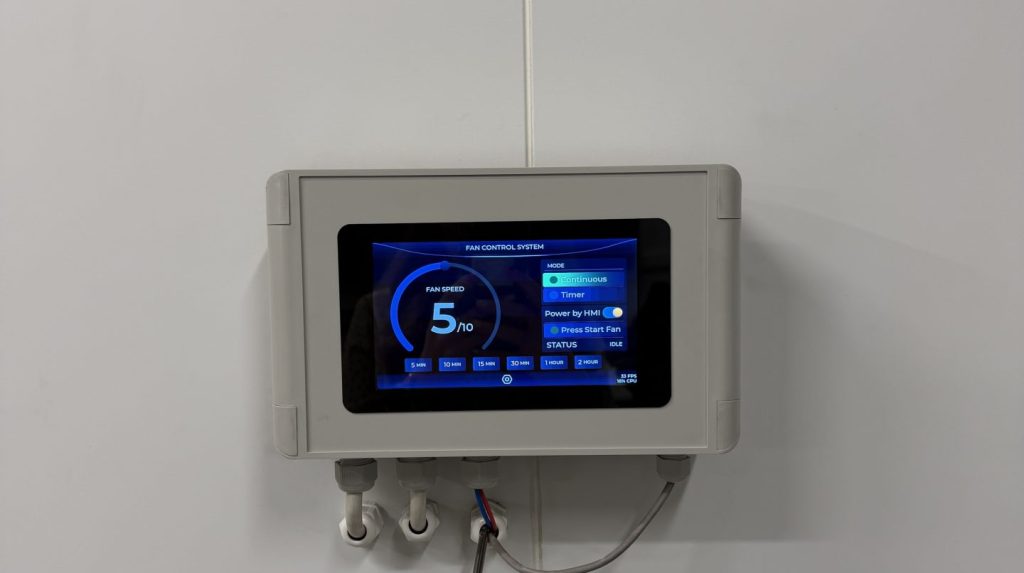
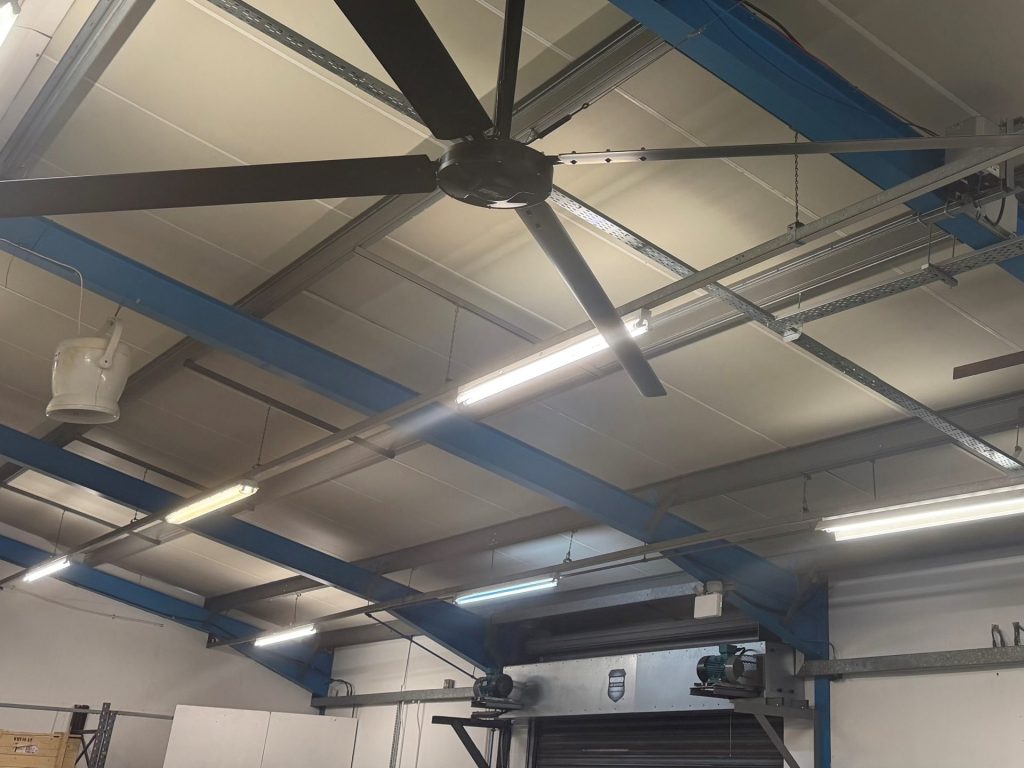
Destratification Fans are designed to combat temperature stratification, a common issue in industrial buildings with high ceilings. As warm air naturally rises, heated air can accumulate at roof level, leaving the occupied areas below significantly cooler. This temperature imbalance often means heating systems must work harder and consume more energy to maintain comfortable working conditions.
By gently circulating warm air back down into the occupied space, Destratification Fans help create a more even temperature throughout the building. This allows businesses to make better use of the heat they have already generated, improving employee comfort while reducing unnecessary heating demand.
Air Barriers solve a different problem.
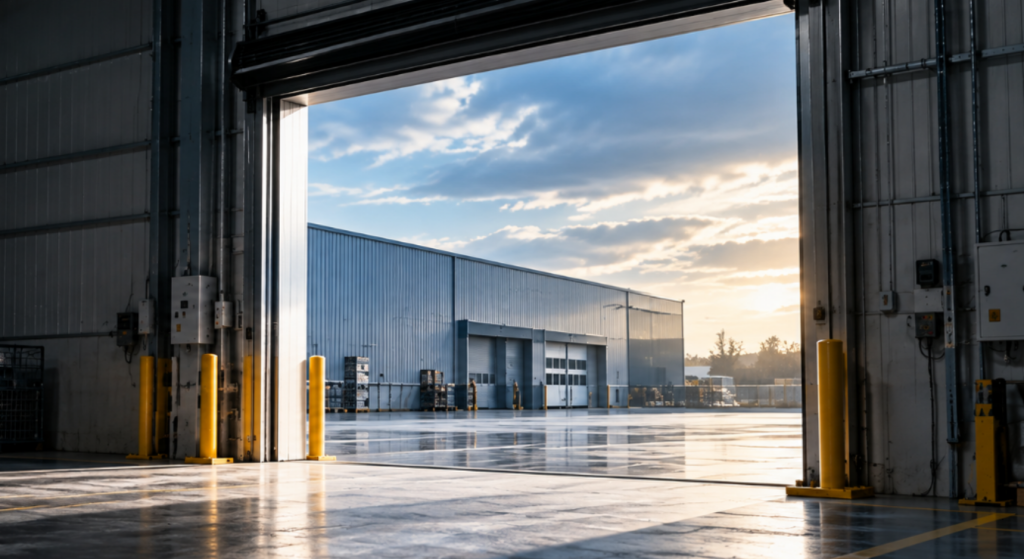
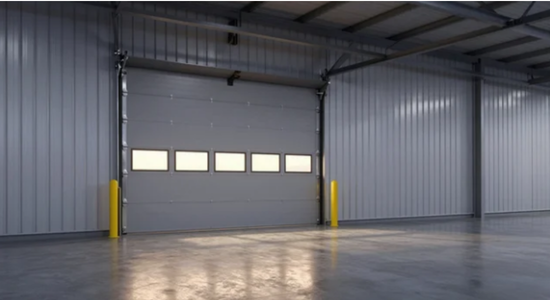
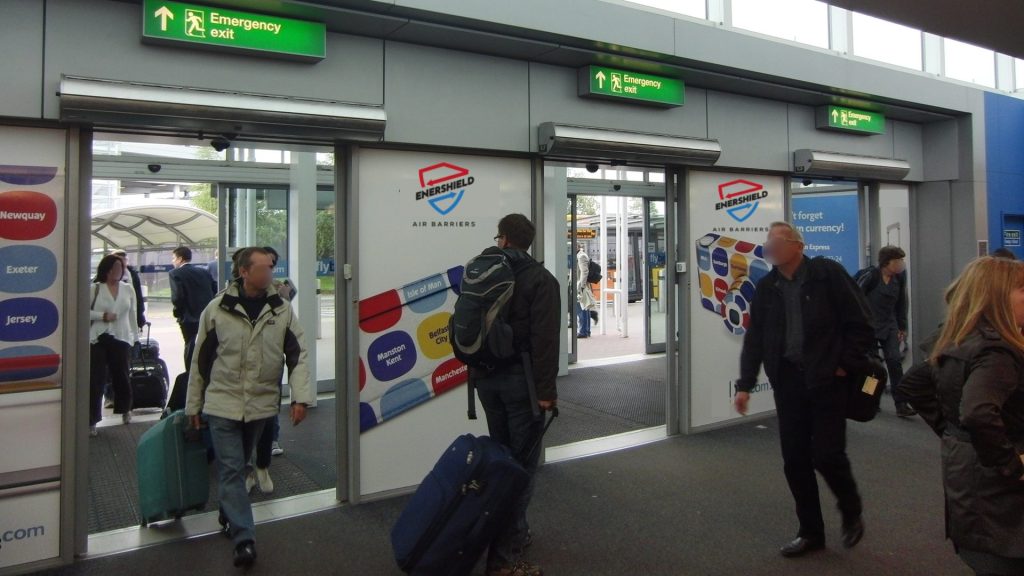
Whenever large entrance doors are opened, valuable conditioned air can escape while outside air enters the building. During winter this can result in significant heat loss, while in warmer months it allows hot external air to enter the facility. These fluctuations can increase energy consumption, create uncomfortable working conditions and place additional demand on heating and cooling systems.
An Air Barrier creates a controlled stream of air across the doorway, helping to reduce the transfer of air between the inside and outside environments. This helps maintain more consistent indoor temperatures while also reducing draughts, limiting the ingress of dust, insects and airborne contaminants, and supporting a more comfortable workplace.
Rather than competing technologies, Air Barriers and Destratification Fans address different sources of energy loss, making them highly complementary within a wider building performance strategy.
Why Air Barriers and Destratification Fans Work Better Together
Although each technology delivers valuable benefits independently, their greatest potential is often realised when they are used together.
Imagine a large warehouse during winter. A Destratification Fan successfully redistributes warm air that has accumulated near the roof, bringing it back down to occupied level where employees and operations can benefit from it. Heating systems operate more efficiently because the warmth is no longer trapped overhead.
However, every time a loading door opens, much of that conditioned air can still escape from the building if the entrance is left unprotected. The heating system must then work harder to replace the lost heat, reducing some of the efficiency gains achieved through destratification.
The opposite is equally true.
An Air Barrier can significantly reduce heat loss through frequently used entrances, helping to retain conditioned air inside the building. However, if a large proportion of that heat continues to collect unused at ceiling level, the building is still not operating as efficiently as it could.
Together, these technologies solve two separate but closely connected challenges.
Beyond improving energy efficiency, there is another benefit that is often overlooked. Many industrial operations rely on stable environmental conditions to maintain product quality, packaging integrity and process consistency. Frequent temperature fluctuations caused by open doorways or uneven heat distribution can introduce unnecessary variability into these environments, particularly where products or production processes are sensitive to changes in temperature.
By combining Air Barriers with Destratification Fans, businesses can create a more stable and consistent internal climate throughout the facility. This can help support processes where maintaining an even temperature is important, whether that involves protecting temperature-sensitive products, reducing the risk of packaging spoilage or distortion, improving storage conditions or helping manufacturing processes operate more consistently. While the exact requirements vary between industries, maintaining a controlled environment can contribute to both operational efficiency and product quality.
Destratification Fans help ensure conditioned air is distributed evenly throughout the building, while Air Barriers help prevent that conditioned air from escaping through open doorways. By supporting one another, they can contribute to more consistent temperatures, improved occupant comfort, greater process stability and lower overall energy consumption.
This joined-up approach reflects a broader shift in how businesses are thinking about energy efficiency. Rather than relying on individual products to solve every challenge, many organisations are looking at how complementary technologies can work together to maximise the performance of the entire building. In many cases, that means delivering benefits that extend beyond energy savings to include improved process reliability, reduced product waste and more consistent operating conditions.
Where This Combination Can Deliver the Greatest Value
Many industrial and commercial environments can benefit from combining Air Barriers with Destratification Fans, particularly where large building volumes, high ceilings and frequently used entrances create ongoing temperature management challenges.
This approach can be especially valuable in:
- Warehouses and distribution centres, where loading doors open regularly throughout the day and warm air naturally rises into high-bay storage areas.
- Manufacturing facilities, where consistent environmental conditions can support process stability, improve employee comfort and help heating systems operate more efficiently.
- Aircraft hangars, where vast internal spaces and oversized doors make temperature control particularly challenging.
- Food and beverage facilities, where maintaining stable temperatures can support product quality, packaging integrity and process consistency, while helping to minimise the movement of airborne contaminants.
- Recycling and waste facilities, where regular vehicle movements and large open entrances can make environmental control more difficult.
Although every facility has different operational requirements, businesses facing challenges with heat loss, uneven temperatures or rising energy costs may benefit from considering how these technologies can work together as part of a wider building performance strategy.
Taking a Whole Building Approach
Improving the performance of an industrial building is rarely about installing a single piece of equipment.
The most energy-efficient facilities typically take a holistic approach, combining multiple technologies that work together to reduce unnecessary energy loss, improve comfort and optimise the performance of existing heating and cooling systems.
Air Barriers and Destratification Fans demonstrate the value of this thinking. While each addresses a different challenge, together they help create a more balanced indoor environment by improving the distribution of conditioned air and reducing unnecessary air exchange through open entrances.
As businesses continue to focus on reducing operating costs, improving energy efficiency and supporting sustainability objectives, considering how complementary technologies work together is becoming increasingly important.
Rather than viewing Air Barriers and Destratification Fans as separate investments, organisations should consider how they can form part of a wider building strategy that delivers long-term operational, financial and environmental benefits.