Sustainability has become a priority for businesses across almost every industry. From upgrading equipment and improving building performance to reducing energy consumption and setting carbon reduction targets, organisations are investing significant time and money into becoming more efficient.
But there is an important question that can sometimes be overlooked: how do you know whether those improvements are actually working?
Making a change and assuming it has improved sustainability is not the same as demonstrating an improvement. If businesses want to understand the real impact of energy efficiency projects, measurement needs to be considered from the beginning.
Sustainability Needs a Starting Point
Before measuring improvement, you need to understand where you started.
Establishing a baseline provides something against which future performance can be compared. Depending on the project, this could include energy consumption, heating or cooling demand, operating hours, internal temperatures or other relevant performance data.
Without that baseline, it can be difficult to separate genuine improvements from normal variations in building operation.
For example, a reduction in heating consumption following an energy efficiency project may initially appear successful. However, if the winter was considerably milder than the previous year, some of that reduction could simply be the result of higher external temperatures.
Effective measurement therefore requires context as well as data.
Look Beyond Individual Equipment
Energy efficiency is often discussed in terms of individual pieces of equipment. A more efficient heating system, refrigeration plant or piece of machinery can certainly contribute to lower energy consumption, but equipment is only one part of a much larger system.
The way a building operates can have a significant influence on overall energy demand.
Industrial and commercial buildings can experience energy loss through poorly controlled entrances, unnecessary air exchange, inadequate zoning and differences between internal and external temperatures. If conditioned air is continually escaping from a building, heating or cooling equipment may have to work harder simply to maintain the required internal conditions.
This is why improving sustainability should involve looking at how the whole building performs rather than assessing individual technologies in isolation.
The Importance of Air Exchange
Frequently open doorways are a good example of an area that can be overlooked when assessing building energy efficiency.
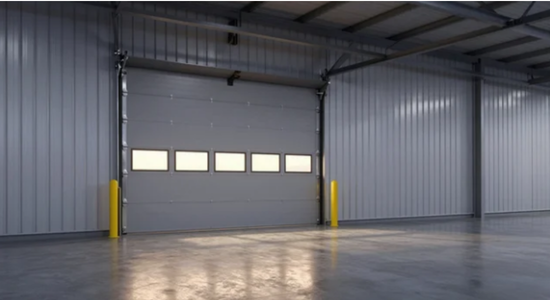
Every time a large industrial doorway opens, the separation between the internal and external environment is removed. Differences in temperature, pressure and air density can allow conditioned internal air to escape while external air enters the building.
The impact will vary depending on factors such as doorway dimensions, opening frequency, external weather conditions, internal temperature requirements and the length of time the entrance remains open.
In a busy facility where doors need to remain open for regular vehicle or pedestrian access, this process can happen repeatedly throughout the working day.
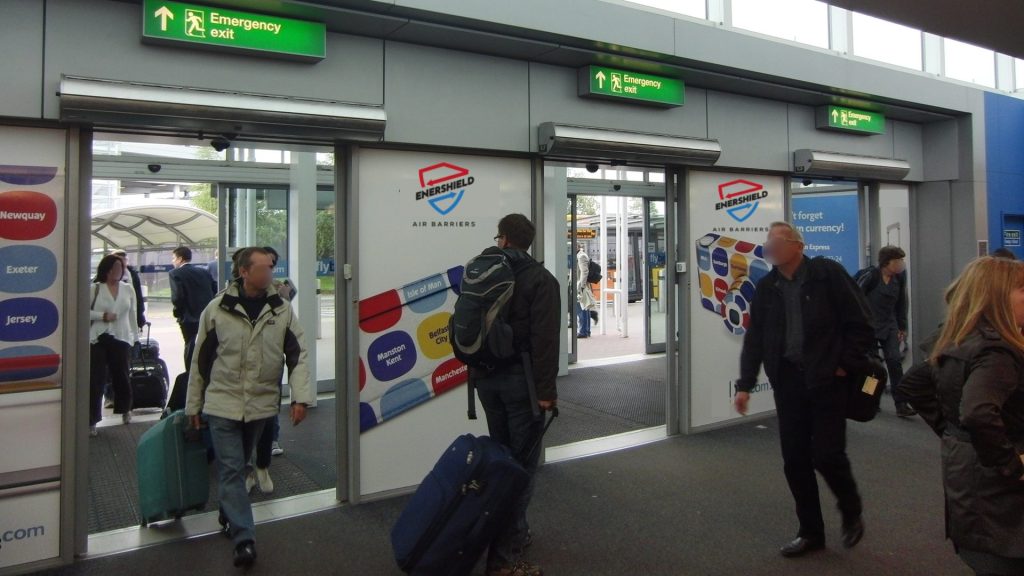
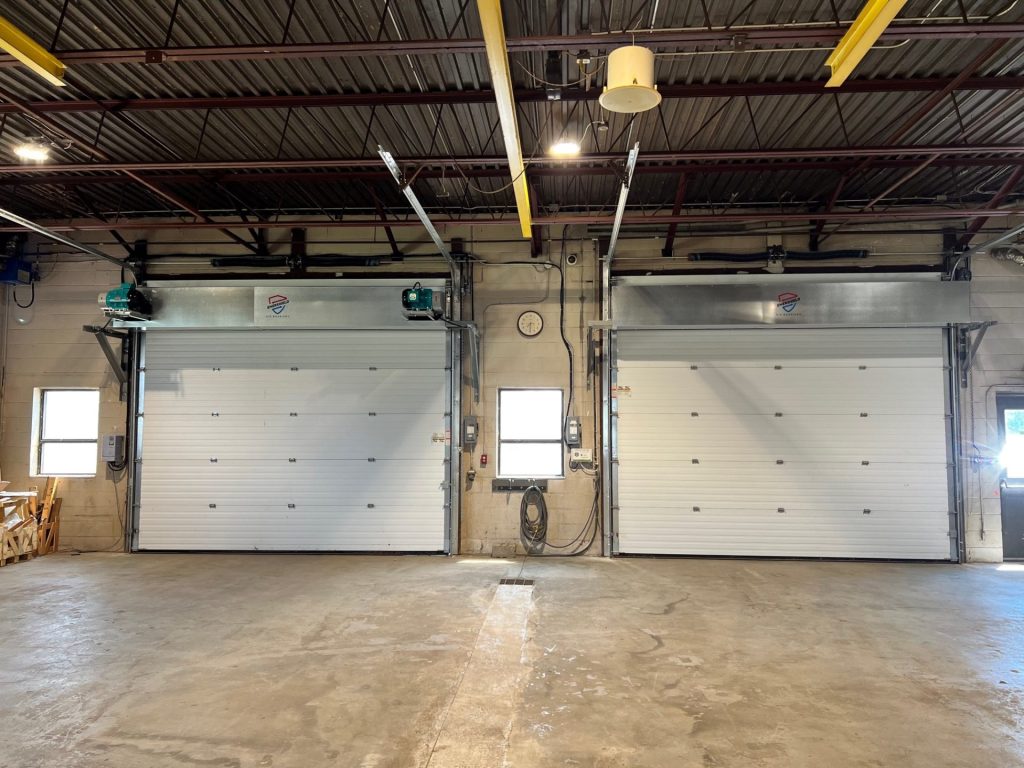
Controlling unnecessary air exchange can therefore form part of a wider approach to reducing building energy demand. Enershield Air Barriers are designed to create an effective air seal across an open doorway, helping to limit the transfer of air between two environments while maintaining open access.
The important point, however, is not simply installing a solution. It is understanding what difference that solution makes.
What Should Businesses Measure?
There is no single metric that will demonstrate whether every sustainability project has been successful. The right measurement depends on what the project is intended to achieve.
For an energy efficiency improvement, businesses might consider changes in overall energy consumption, heating or cooling demand, operating hours or the amount of energy required to maintain a particular internal temperature.
Building conditions can also provide useful information. Monitoring temperature stability around frequently used entrances, for example, can help demonstrate whether environmental conditions have become easier to maintain.
Where possible, measurements should be taken over a meaningful period rather than relying on a single snapshot. Seasonal conditions, production levels, occupancy and operating schedules can all influence energy consumption.
Comparing equivalent periods and accounting for these variables provides a much clearer picture of actual performance.
Measurement Makes Better Decisions Possible
The value of measuring sustainability improvements extends beyond proving whether an individual project worked.
Reliable data can help businesses understand where further opportunities exist, prioritise future investment and identify which changes are delivering meaningful results.
It can also help prevent resources being directed towards areas that appear inefficient but have relatively little influence on overall energy demand.
This shifts sustainability away from a series of individual projects and towards an ongoing process of understanding, improving and verifying building performance.
From Sustainability Claims to Measurable Performance
Businesses are under increasing pressure to demonstrate progress on energy efficiency and sustainability. That makes the ability to measure performance increasingly important.
Installing more efficient technology is part of the picture, but sustainable building performance also depends on understanding how energy moves through a facility, where unnecessary demand is being created and whether interventions are delivering the expected results.
Whether the focus is heating, cooling, refrigeration, ventilation or uncontrolled air exchange through frequently open entrances, the principle remains the same.
If an improvement is worth making, its impact should be worth measuring.
By establishing a baseline, considering the building as a complete system and reviewing performance after changes have been made, businesses can move beyond assumed improvements and towards sustainability that can be demonstrated with evidence.