
Airport terminals are among the most demanding environments when it comes to maintaining consistent indoor temperatures. With thousands of passengers moving through entrances every day, large open spaces and constantly changing external conditions, managing energy efficiency presents a significant challenge.
While much of the conversation around airport sustainability focuses on heating, ventilation and air conditioning (HVAC) systems, building insulation and renewable energy, one area is frequently overlooked: the impact of frequently opened doorways on energy consumption.
For airport operators looking to reduce operational costs and improve environmental performance, understanding how air moves through these openings is an important part of developing a more efficient building.
The Hidden Energy Cost of Airport Entrances
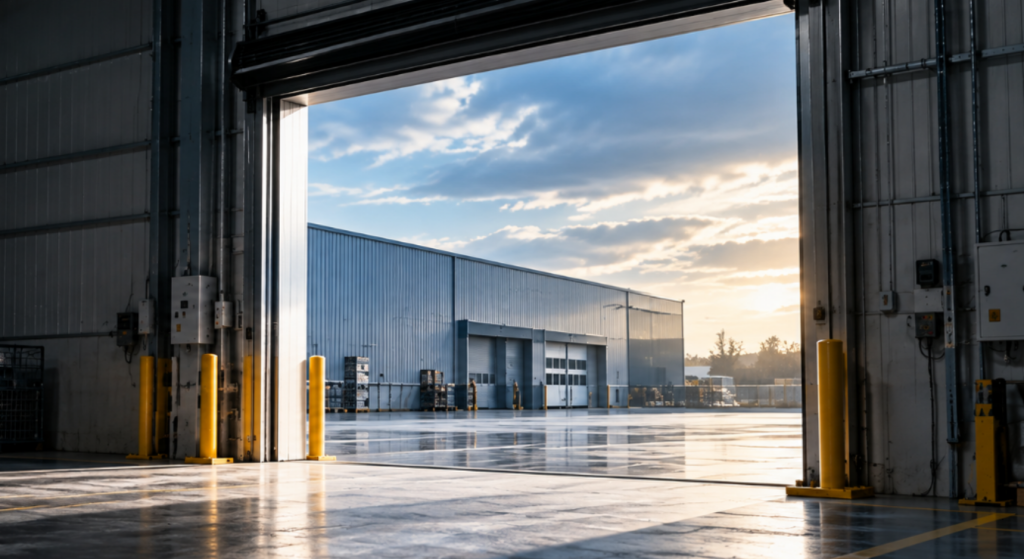
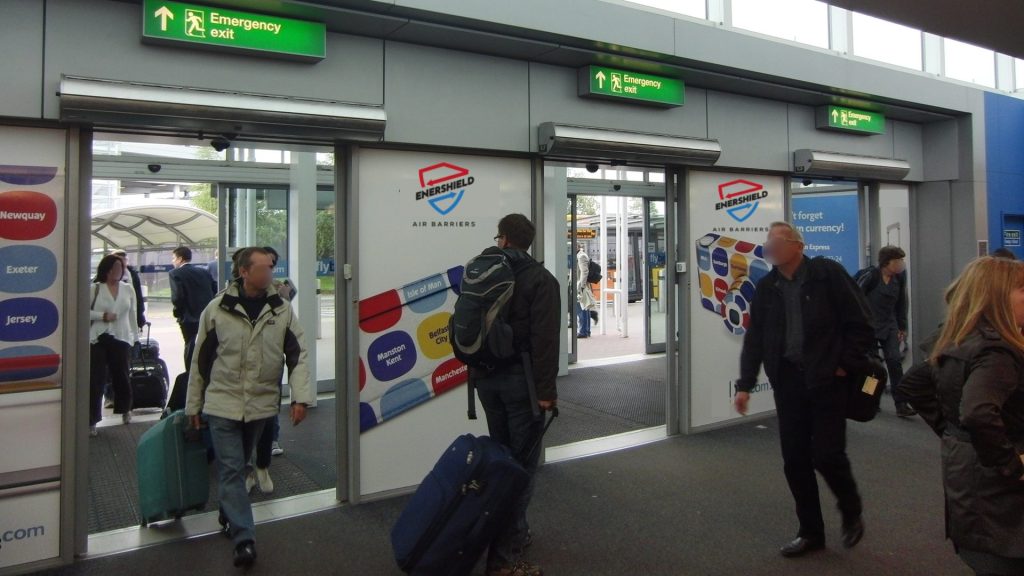
Airport terminals are designed to accommodate continuous movement. From main passenger entrances and arrivals halls to baggage handling areas and service access points, doorways are essential to maintaining efficient operations.
However, every time an external doorway opens, it creates an opportunity for conditioned indoor air to escape and outdoor air to enter. This uncontrolled exchange of air, known as air infiltration, places additional demand on the building’s heating and cooling systems.
During colder months, heated indoor air can escape while colder external air enters, forcing heating systems to work harder to maintain comfortable conditions. In warmer weather, the reverse occurs, with cooled indoor air being displaced by warmer outdoor air.
The challenge becomes particularly significant in airport environments, where entrances may remain open for extended periods or operate almost continuously throughout the day.
Even when an HVAC system is operating efficiently, uncontrolled air movement through entrances can undermine its overall performance.
Why Airport Terminals Are Particularly Vulnerable
Several characteristics of airport buildings make managing doorway-related energy loss especially challenging.
High volumes of passenger traffic: Unlike many commercial buildings, airports experience frequent and often continuous movement through entrances. Automatic doors may open repeatedly during peak travel periods, limiting the time available to maintain separation between indoor and outdoor environments.
Large entrance openings: Airport entrances must accommodate passengers, luggage, trolleys and accessibility requirements. Larger openings can create greater opportunities for air exchange, particularly where significant indoor and outdoor temperature differences exist.
Pressure differences: Mechanical ventilation, building design and the stack effect can create pressure differences between internal and external environments. These conditions can increase airflow through open entrances, making temperature control more difficult.
Exposure to changing weather conditions: Wind speed, direction and external temperature can all influence the amount of air entering a building. Exposed terminal entrances may experience particularly challenging conditions during periods of strong wind or extreme temperatures.
Together, these factors create an environment where doorway performance can have a meaningful impact on both energy consumption and passenger comfort.
The Wider Impact on HVAC Performance
The consequences of uncontrolled air exchange extend beyond the immediate entrance area.
When conditioned air is lost through a doorway, HVAC systems must compensate for the additional heating or cooling demand. Depending on the building and operating conditions, this can lead to increased energy consumption, greater system workload and difficulties maintaining consistent internal temperatures.
In large airport terminals, where HVAC systems already serve substantial floor areas, unnecessary heating and cooling demand can contribute to significant operational expenditure over time.
There is also an important relationship between temperature control and passenger experience. Cold draughts near entrances, uncomfortable waiting areas and inconsistent temperatures can affect how passengers and employees experience the terminal environment.
For airport operators, the objective is therefore not simply to reduce energy consumption, but to maintain comfortable conditions without compromising the movement of people through the building.
Why Conventional Door Solutions May Not Be Enough
Automatic sliding doors, revolving doors and entrance vestibules all have a role in reducing uncontrolled air exchange. However, their effectiveness depends on factors such as traffic volume, entrance configuration and how frequently openings are used.
In particularly busy locations, automatic doors may remain open for much of the operating period. Similarly, some terminal layouts may not have sufficient space for additional vestibules or other physical separation measures.
This highlights an important consideration for building designers and facilities managers: how can effective environmental separation be maintained without restricting access or interrupting passenger flow?
One approach is to consider technologies that provide separation between indoor and outdoor environments while allowing entrances to remain accessible.
The Role of Air Barriers in Airport Energy Efficiency
Air barriers offer a way to reduce uncontrolled air exchange through open doorways without introducing a physical obstruction.
By generating a controlled stream of air across an entrance, an appropriately designed air barrier can help separate indoor and outdoor environments, reducing the movement of conditioned air through the opening.
For airport terminals, this approach can provide several operational advantages, including:
- Reduced unwanted air infiltration through frequently used entrances.
- Lower unnecessary heating and cooling demand.
- Improved temperature consistency around entrance areas.
- Reduced cold draughts and improved passenger comfort.
- Unrestricted movement for passengers, luggage and equipment.
However, not all entrances present the same conditions, and effective air barrier performance depends on correct specification.
Doorway dimensions, temperature differences, pressure conditions, wind exposure and opening patterns must all be considered when determining the most suitable solution. An incorrectly specified or installed system may fail to provide the intended level of environmental separation.
This makes technical assessment an essential part of the process, particularly in complex environments such as airport terminals.
A More Considered Approach to Airport Sustainability
As airports face increasing pressure to improve environmental performance and manage operating costs, attention is turning towards opportunities to reduce energy demand across existing infrastructure.
Investments in more efficient HVAC equipment and building management systems remain important, but these improvements should be considered alongside the building’s ability to retain conditioned air.
Reducing unnecessary energy loss at entrances can support wider efficiency measures by helping heating and cooling systems maintain the intended indoor environment.
It also demonstrates why building energy performance should be approached as a complete system. Improving the efficiency of equipment is only one part of the equation. Understanding where energy is being lost, and addressing the underlying causes, is equally important.
Looking Beyond the HVAC System
Airport terminals will always require accessible, high-traffic entrances. The challenge is ensuring that these essential openings do not create unnecessary energy demand.
For facilities managers, building designers and airport operators, evaluating doorway performance offers an opportunity to identify inefficiencies that may otherwise go unnoticed.
As the aviation industry continues to prioritise energy efficiency and sustainability, greater attention must be given to how buildings retain conditioned air, not simply how efficiently they produce it.
Ultimately, improving energy performance requires a whole-building approach, and understanding the impact of frequently opened doorways is an important part of that process.