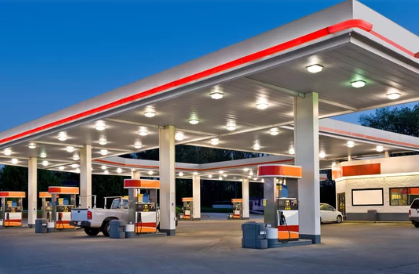
Around the world, we often use different words for the same thing. In the UK, it’s a petrol station. In North America, it’s a gas station. Elsewhere, you might hear service station, filling station or fuel station. While the terminology changes depending on where you are, the challenges faced by these facilities are remarkably similar.
Every site needs to provide customers with a clean, comfortable retail environment while managing the constant movement of people, outdoor air and vehicles. At the same time, operators are under increasing pressure to reduce energy consumption, maintain comfortable internal temperatures, improve customer experience and protect the products they sell.
From customer entrances opening hundreds of times a day to loading doors remaining open throughout deliveries, these facilities have another challenge in common: managing what can enter and escape through an open doorway.
That raises an important question. If the challenges are shared globally, shouldn’t the solutions be too?
The Challenge Starts Every Time the Entrance Opens
Unlike many retail environments, fuel stations experience a unique combination of conditions. Customers move quickly between the fuel dispensing area and the shop throughout the day, often with entrance doors opening hundreds of times.
Every time those doors open, the separation between the indoor and outdoor environment is compromised. Depending on the location, season and surrounding environment, this can result in three key challenges: outside temperature infiltration, fumes and airborne contaminants entering from outside the store, and insects entering the retail environment.
Temperature can be a particular challenge at smaller petrol filling stations. With a relatively small volume of air inside the building, it may not take long for comfortable internal conditions to be compromised when the entrance is opening repeatedly during busy periods.
During winter, heated internal air can escape while colder outside air enters. During warmer weather, the opposite can happen, with outside heat entering an air-conditioned or temperature-controlled space. The result is not simply an uncomfortable doorway. In a smaller building, it can influence conditions throughout the retail environment.
For stores selling fresh food, coffee, bakery products and grab and go meals, maintaining a comfortable, cleaner and well-controlled indoor environment is becoming increasingly important.
Protecting the Retail Environment From Outside Conditions
Fuel stations have evolved far beyond simply selling fuel. Many locations now generate a significant proportion of their revenue from convenience retail, food to go, chilled products and premium coffee.
These products are designed to attract customers into a pleasant shopping environment. However, every open doorway creates an opportunity for outside conditions to influence the environment inside.
Outdoor temperatures are one consideration, but so are fuel odours, vehicle exhaust emissions, dust, airborne contaminants and insects. For a facility where food and drink may be prepared, displayed and consumed, controlling this movement becomes an important part of protecting the overall retail environment.
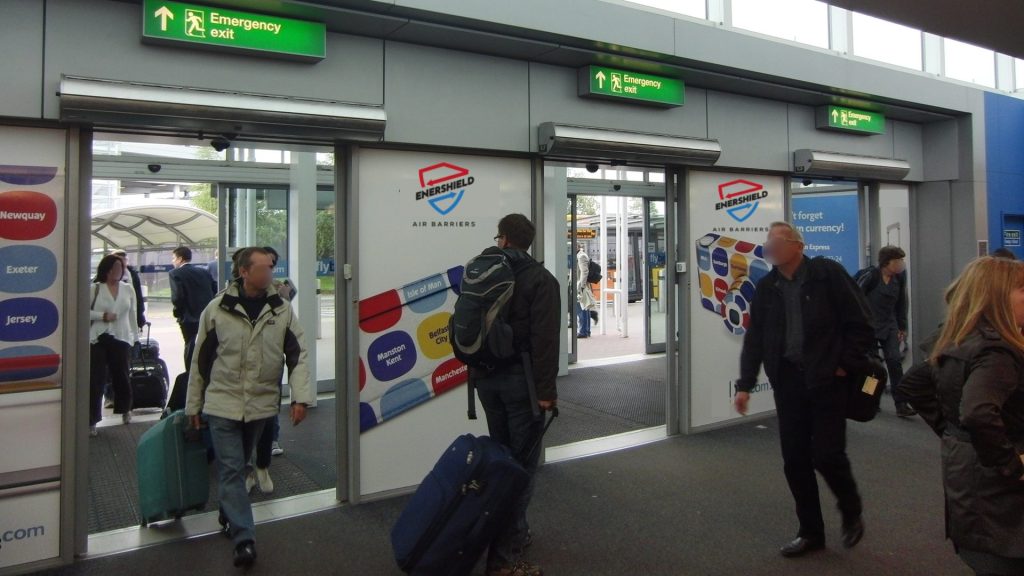
Enershield Air Barriers create an invisible stream of air across an open doorway, helping to separate indoor and outdoor environments without restricting access. By reducing the movement of air through the entrance, they can help limit outside temperature infiltration as well as the movement of fumes, insects and other airborne contaminants.
The positive result is a retail space that is easier to keep comfortable and controlled, providing a more pleasant environment for customers and staff while helping protect the conditions operators are working to create inside.
Why Temperature Control Matters in Smaller Spaces
At smaller fuel stations, maintaining temperature can present a particular challenge because there is simply less internal air volume to begin with. During a busy period, repeated door openings can therefore have a noticeable impact on conditions inside the store.
One approach sometimes seen in UK petrol stations is the installation of small electric heaters above entrance doors. These can provide useful supplementary heating and may appear to offer a straightforward solution because they are relatively inexpensive and easy to install.
However, there is an important distinction between heating a space and protecting it.
Positioning a heater directly above an entrance means it is attempting to add heat at the same point where internal air is being lost and external air is entering. Rather than relying on supplementary heating to compensate for that continual exchange, the first priority should be controlling the movement of air through the open doorway.
An Enershield Air Barrier positioned above the entrance can provide that environmental separation, helping to retain the temperature inside the building. Supplementary heaters can then be positioned elsewhere within the space, where they can focus on their intended purpose: providing heat to the retail environment.
The result is a more considered approach to temperature control. Instead of continually replacing heat lost through the entrance, operators can protect the internal environment first, allowing their heating systems to focus more effectively on maintaining comfortable conditions throughout the space.
What About Loading and Delivery Doors?
The customer entrance is not the only open doorway that can influence conditions inside a fuel station.
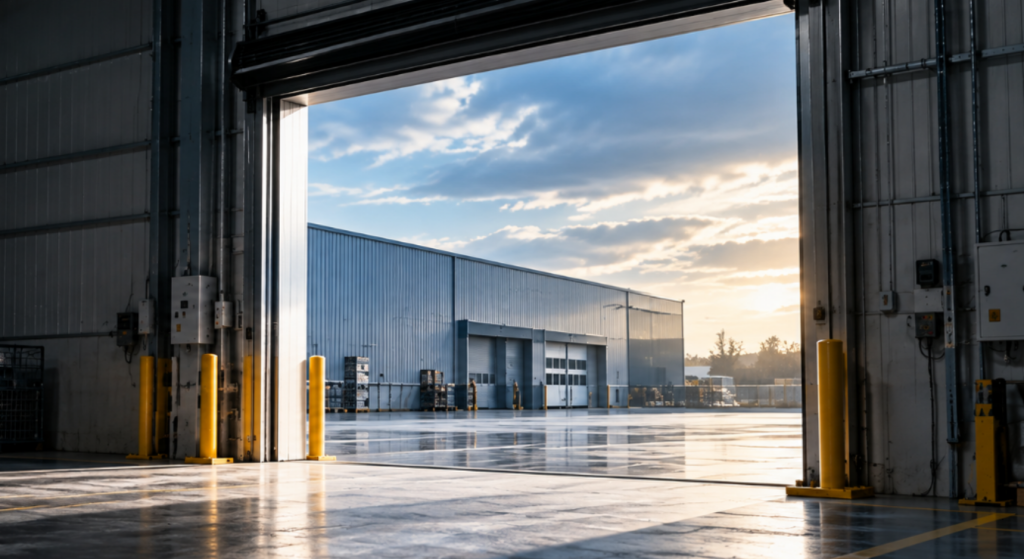
Many facilities also have dedicated loading or delivery doors which can remain open for extended periods while stock is moved into the building. Depending on the size and nature of a delivery, these openings may be exposed to outside conditions for significantly longer than the main customer entrance.
During this time, the same challenges apply. Cold or warm outside air can enter the building, conditioned internal air can escape, and fumes, insects, dust and other external contaminants have another route into the facility.
In fact, because loading doors may be larger and remain open for longer periods, the potential impact on the internal environment can be significant.
Applying an Enershield Air Barrier to loading and delivery openings provides another layer of environmental separation while still allowing staff and goods to move freely through the doorway.
Rather than viewing individual doors in isolation, operators can consider how all frequently opened entrances affect the building as a whole. Protecting both customer and loading doorways can help create more consistent internal temperatures, reduce unwanted infiltration and provide greater control over the environment throughout the facility.
Why Air Quality Is Becoming More Important
Temperature is only one part of creating the right internal environment. Consumers have also become increasingly aware of indoor air quality, particularly in places where food is prepared, displayed or consumed.
Whether someone is buying a freshly made sandwich, a hot coffee or groceries for the journey home, the expectation is that the retail environment feels clean, fresh and comfortable.
While no entrance solution can eliminate every external influence, reducing the migration of fuel vapours, vehicle exhausts, dust, insects and other outside contaminants can contribute to a more pleasant environment for both customers and staff.
For operators investing heavily in modern convenience stores, maintaining both comfortable temperatures and a cleaner internal environment helps reinforce the quality of the overall customer experience.
It’s Not Just About Comfort
When people think about Enershield Air Barriers, energy efficiency is often the first benefit that comes to mind.
By reducing the exchange of indoor and outdoor air, buildings can retain conditioned air more effectively, reducing unnecessary heating and cooling losses throughout the year. For smaller fuel stations, where internal temperatures can be affected relatively quickly by repeated door openings, this separation can be particularly valuable.
However, the real value is better understood by looking at the positive impact this can have across the facility.
Enershield Air Barriers can help operators achieve:
- More consistent and comfortable internal temperatures throughout the year.
- Reduced infiltration of vehicle exhaust emissions and fuel odours from outside the store.
- Greater protection against insects, dust and other outside contaminants.
- A cleaner and more pleasant environment around food preparation and retail areas.
- Fewer uncomfortable cold draughts around customer entrances during winter.
- Better separation between outdoor conditions and the indoor retail environment.
- More effective use of supplementary heating within smaller facilities.
- Reduced unnecessary demand on heating and air conditioning systems.
- Lower levels of conditioned air escaping through frequently opened entrances.
- A welcoming and unrestricted entrance for customers, staff and deliveries.
These are not simply individual product advantages. Together, they can contribute to a facility that is easier to control, more comfortable for customers and staff, and more efficient to operate.
A Global Challenge With a Universal Solution
Whether you call it a petrol station, gas station, service station or fuel station, the priorities remain largely the same.
Operators want customers to spend longer in store, purchase higher value food and drink products and return again in the future. Achieving that relies on creating an environment that feels comfortable, clean and professionally maintained.
The open doorways throughout a facility play a far greater role in that experience than many people realise. A customer entrance repeatedly opening during a cold winter morning and a loading door remaining open throughout a delivery may look like two different operational challenges, but both create the same fundamental issue: an opening in the environmental separation between inside and outside.
By considering how these openings affect temperature, fumes, insects, contaminants and energy use, operators can begin to look beyond simply heating or cooling the space and instead consider how effectively they are protecting it.
As convenience retail continues to evolve, solutions that help maintain indoor temperatures, reduce unwanted infiltration and protect the retail environment are becoming increasingly valuable. Enershield Air Barriers provide a practical way to address these challenges without affecting the accessibility and convenience these facilities require.
Looking Beyond the Name
The language may change from country to country, and building designs, climates and heating requirements may vary, but the fundamental challenge remains similar.
Whether your customers stop at a petrol station in the UK, a gas station in North America or a service station elsewhere in the world, they all expect the same thing: a clean, comfortable store where they can shop with confidence.
Protecting that environment means thinking about every opening that connects it to the outside, from the customer entrance at the front of the store to the loading doors used for deliveries.
Enershield Air Barriers help create that separation, reducing outside temperature infiltration, helping limit the movement of fumes, insects and contaminants, and allowing heating and cooling systems to work more effectively.
The positive outcome is not simply a protected doorway. It is a more comfortable customer experience, a better-controlled retail environment and a facility that can operate more efficiently.
The name above the fuel station may differ, but the need to protect the environment behind every open doorway is universal.