
When comparing an air curtain vs an air barrier, the goal is usually the same: reducing energy loss through open doorways in commercial and industrial buildings. Every time a door opens, an exchange of air across the door occurs, impacting internal temperature changes and increases the risk of humidity, dust, and insect ingress. To address this problem, buildings often install air curtains (some heated) or air barriers. While the two technologies are often referred to each other in the same context, they can work in very different ways and deliver very different results.
What is a (heated) air curtain?
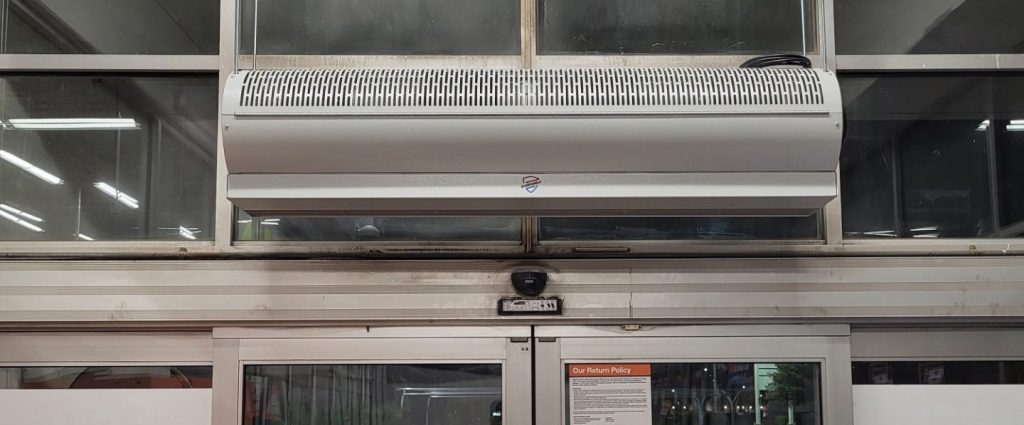
An air curtain is a device mounted above a doorway that projects a stream of air down across the entrance. These systems are common in retail environments where the retailer operates an open-door policy, and the doors remain open to invite customer access. Many heated air curtains are designed primarily to provide a flow of warm air near the entrance in an effort to condition colder air ingress and customers feel comfortable when entering the building.
Although they can help to reduce the impact of lowering internal temperature, they do not have the performance to reduce the air exchange across the door. In many cases, the heated air escapes out of the doorway while the system continues to run, which can increase heating or cooling costs.
What is an air barrier?
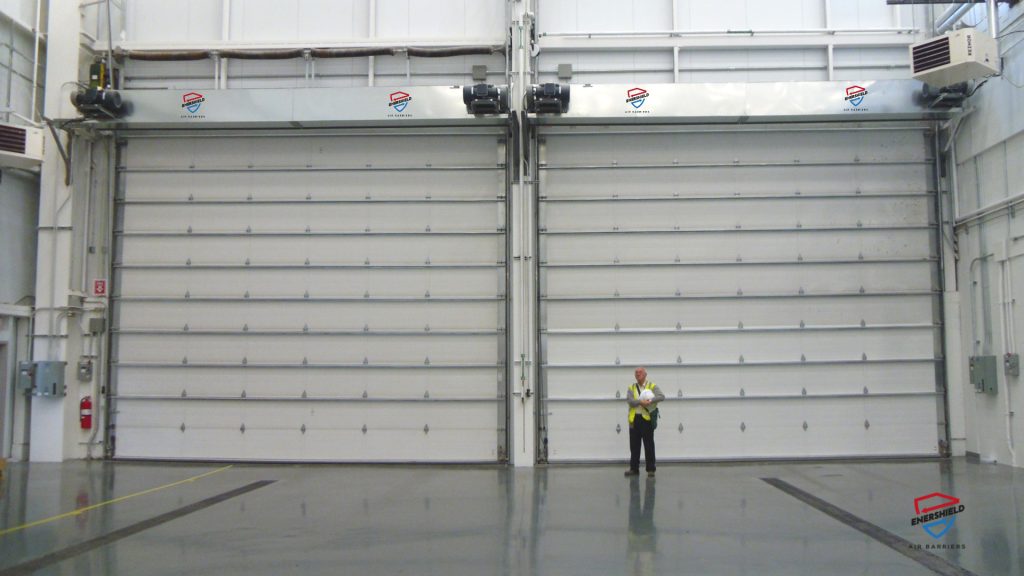
An air barrier is designed to achieve a different purpose. Instead of simply blowing warm air downward, it is positioned much closer to the door opening and projects a higher air velocity uniformed airflow across the entire opening (top to bottom) that acts as a virtual door. This airflow can be adjusted to create a stronger seal to significantly reduce the air exchange and helps to stabilise the internal set point conditions.
No additional heating is added to the airstream, as by simply recirculating internal air and directing it across the entrance, air barriers reduce outside air from penetrating the building while allowing people, vehicles, and goods to move freely.
Air curtain vs air barrier: the key difference
The main difference between an air curtain and an air barrier is the performance and ability to separate indoor and outdoor environments when a door is open.
Air curtains are often designed to provide warmth near the doorway. While they can provide supplementary heating to the space and improve comfort, they can be costly to operate, and they do not always have the power to prevent ingress of outside air entering the building. In many cases the heat escapes from the building through the open door and so the energy used is wasted.
Air barriers are designed specifically to create environmental separation. By recirculating internal air and directing it across the opening at high velocity, they create a kinetic seal that reduces outside air from entering while allowing access through the doorway. No extra energy is used to provide heating and so the air barrier simply operates only when the door is in the open position.
Why the difference matters in high traffic buildings
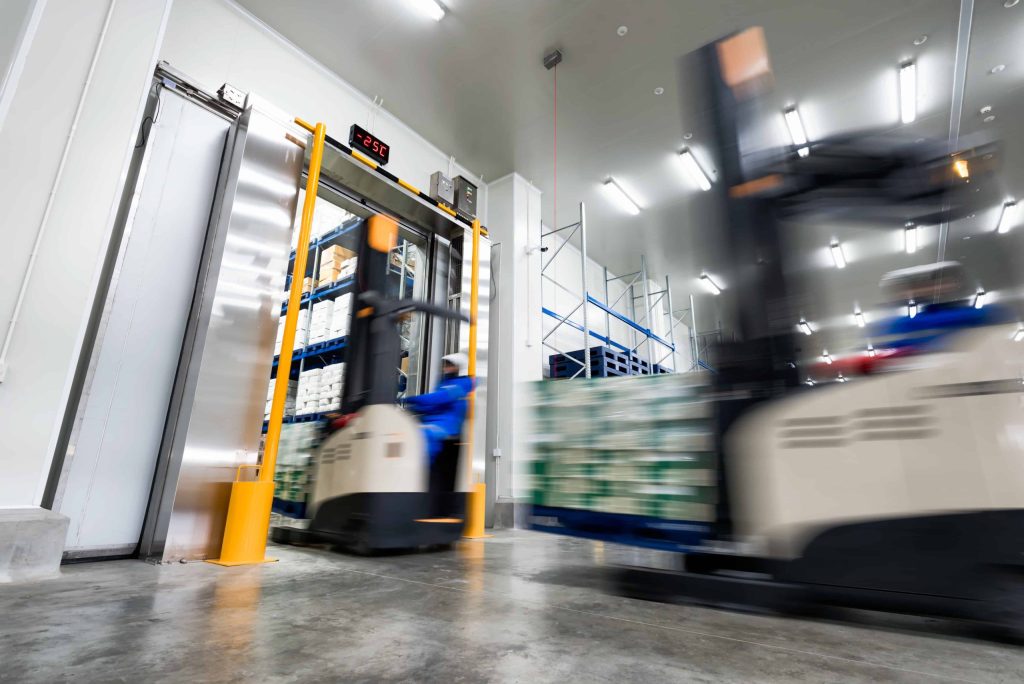
The difference between an air curtain and an air barrier becomes most visible in high footfall or traffic environments, which are temperature controlled or where cleanliness is crucial. Airports, shopping centres, retail, cold storage and some manufacturing facilities all experience constant door activity. Without an effective environmental separation, heating and cooling systems must work harder to compensate for the continuous exchange of air.
This results in higher energy use, discomfort, unstable internal conditions and in sensitive areas noncompliance.
How air barriers improve energy efficiency
Air barrier technology is designed to address this challenge directly. By maintaining a consistent airflow seal across open entrances, air barriers can significantly reduce the transfer of temperature, humidity, dust, odour & insect between indoor and outdoor spaces.
This helps stabilise internal conditions and reduces the workload on HVAC systems, and in turn provides improved energy efficiency, cleaner indoor air quality, and lower operational costs.
Additional benefits of air barrier technology
Air barriers also support better air quality by limiting the entry of dust, fumes, and insects. In facilities where environmental control is crucial, such as food production, pharmaceutical or certain manufacturing environments, maintaining this separation is essential for operational efficiency, hygiene & industry compliance.
Rethinking the modern building entrance
As building managers face increasing pressure to reduce energy consumption and meet sustainability targets, the performance of building entrances is becoming more important. Open doors will always be necessary in busy facilities, but uncontrolled airflow does not have to be.
Air curtains were originally introduced to reduce drafts and improve comfort at entrances. Air barriers take the concept further by actively controlling airflow and creating a true environmental separation. For organisations looking to reduce energy loss, improve indoor conditions, and operate more efficiently, the distinction between the two technologies is significant.
Understanding the difference between an air curtain and an air barrier is the first step toward designing entrances that support both operational performance and long-term sustainability.